MENU
MY | MYR

MY | MYR
-
- All Centrifuges
- Benchtop Centrifuges
- Benchtop Centrifuges
- Floor-Standing Centrifuges
- Refrigerated Centrifuges
- Refrigerated Centrifuges
- Centrifuges
- IVD Products
- Microcentrifuges
- Multipurpose Centrifuges
- High-Speed Centrifuges
- Ultracentrifuges
- Concentrator
- Accessories
- High-Speed and Ultracentrifuge Consumables
- Centrifuge Tubes
- Centrifuge Plates
- Device Management Software
- Sample and Information Management
- VisioNize Devices
- GLP Products China
-
- All Pipettes, Dispensers & Automated Liquid Handlers
- Mechanical Pipettes
- Electronic Pipettes
- Multi-Channel Pipettes
- Positive Displacement Pipettes & Dispensers
- Pipette Tips
- Bottle-Top Dispensers
- Pipette Controllers
- Dispenser & Pipette Accessories
- Automated Pipetting
- Automation Consumables
- Automation Accessories
- Liquid Handler & Pipette Services
- IVD Products
Sorry, we couldn't find anything on our website containing your search term.
You are about to leave this site.
Please be aware that your current cart is not saved yet and cannot be restored on the new site nor when you come back. If you want to save your cart please login in into your account.
Sorry, we couldn't find anything on our website containing your search term.
Our New Findings Have Profound Implications for the Understanding of Neurological Conditions
Beyond Science
- Lab Life
- Off the Bench
- Bright Minds
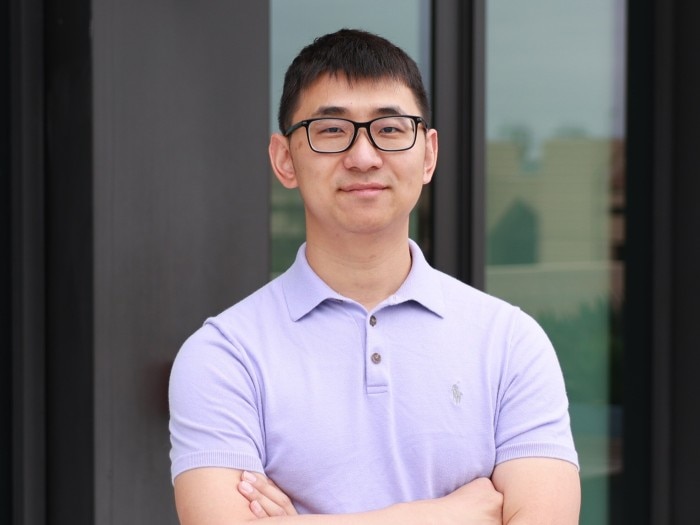
Dr. Cheng Lyu is the winner of the Eppendorf & Science Prize for Neurobiology 2025. Three questions for the Chinese scientist:
Dr. Lyu, based on your research on fruit flies, you have deciphered how olfactory neural circuits develop. At the same time, you discovered that the brains of these tiny creatures can be rewired. What exactly does that mean?
Dr. Cheng Lyu: For a fruit fly to detect certain odors, the neurons within the brain must be wired in a precise manner. We have known for a long time that there are molecules on the surface of neurons that function like ID tags. Until now, though, we didn’t know how these different tags work together for the right connections to form reliably in the brain.
Now we’ve found out that this depends on the exact combination of multiple surface proteins – you could imagine a set of “instructions”. And here’s the exciting part: by tweaking just five of these protein-based instructions in a specific group of neurons, we were able to completely redirect their connections.
Even more strikingly, this type of “rewiring” inside the brain changed the animals’ mating behavior. In one experiment, we altered a neuronal circuit that normally prevents male fruit flies from courting each other. After the rewiring, they did exactly that: those male fruit flies started actively courting other males.
Now, we are talking about very small animals and even smaller brains. What do fly and human brains have in common?
Dr. Lyu: The key insight is that evolution often reuses the same basic building blocks across species. Those surface proteins that we identified in flies are closely related to those found in humans, and we believe that the logic of how they work is likely conserved because this “combinatorial code” of the proteins is so efficient. Also, because a fruit fly’s brain is obviously more accessible compared to the human brain, the results obtained from fruit fly research are usually more solid, and they will stand the test of time.
Our new findings also have profound implications for the understanding of neurological ailments in humans. For example, autism spectrum disorder is not the result of a change in a single gene; rather, this condition involves dozens, even hundreds of genes. By understanding the basic processes of the brains of flies, it gives us a place to start looking for answers in the vastly more complex human brain.
Would you like to share your plans for the future?
Dr. Lyu: I have started my own lab at Westlake University in Hangzhou, China, and we’re going in two directions: first we want to test whether the wiring principles we identified in the olfactory system also apply to the central complex, the cognitive center of a fly’s brain, which is responsible for spacial awareness and navigation.
Second, we want to find out how changes in these networks during the individual development of organisms will shape their cognitive abilities. Or, put differently: can we tweak the developmental process in such a way that it will make a fly learn faster or navigate better? And if we find principles that optimize brain function, they might even inspire new approaches in artificial intelligence – after all, AI is essentially trying to learn and evolve on the basis of continuously new data, and nature has been running this experiment for millions of years.
Dr. Cheng Lyu: For a fruit fly to detect certain odors, the neurons within the brain must be wired in a precise manner. We have known for a long time that there are molecules on the surface of neurons that function like ID tags. Until now, though, we didn’t know how these different tags work together for the right connections to form reliably in the brain.
Now we’ve found out that this depends on the exact combination of multiple surface proteins – you could imagine a set of “instructions”. And here’s the exciting part: by tweaking just five of these protein-based instructions in a specific group of neurons, we were able to completely redirect their connections.
Even more strikingly, this type of “rewiring” inside the brain changed the animals’ mating behavior. In one experiment, we altered a neuronal circuit that normally prevents male fruit flies from courting each other. After the rewiring, they did exactly that: those male fruit flies started actively courting other males.
Now, we are talking about very small animals and even smaller brains. What do fly and human brains have in common?
Dr. Lyu: The key insight is that evolution often reuses the same basic building blocks across species. Those surface proteins that we identified in flies are closely related to those found in humans, and we believe that the logic of how they work is likely conserved because this “combinatorial code” of the proteins is so efficient. Also, because a fruit fly’s brain is obviously more accessible compared to the human brain, the results obtained from fruit fly research are usually more solid, and they will stand the test of time.
Our new findings also have profound implications for the understanding of neurological ailments in humans. For example, autism spectrum disorder is not the result of a change in a single gene; rather, this condition involves dozens, even hundreds of genes. By understanding the basic processes of the brains of flies, it gives us a place to start looking for answers in the vastly more complex human brain.
Would you like to share your plans for the future?
Dr. Lyu: I have started my own lab at Westlake University in Hangzhou, China, and we’re going in two directions: first we want to test whether the wiring principles we identified in the olfactory system also apply to the central complex, the cognitive center of a fly’s brain, which is responsible for spacial awareness and navigation.
Second, we want to find out how changes in these networks during the individual development of organisms will shape their cognitive abilities. Or, put differently: can we tweak the developmental process in such a way that it will make a fly learn faster or navigate better? And if we find principles that optimize brain function, they might even inspire new approaches in artificial intelligence – after all, AI is essentially trying to learn and evolve on the basis of continuously new data, and nature has been running this experiment for millions of years.
Read more
About Dr. Cheng Lyu:
After receiving his physics degree at Peking University, Cheng Lyu completed his doctorate at Rockefeller University in New York and worked subsequently as a postdoc at Stanford University, where he studied neuronal networks in the fruit fly brain. He recently founded his own lab at Westlake University in Hangzhou, China.
After receiving his physics degree at Peking University, Cheng Lyu completed his doctorate at Rockefeller University in New York and worked subsequently as a postdoc at Stanford University, where he studied neuronal networks in the fruit fly brain. He recently founded his own lab at Westlake University in Hangzhou, China.
Read more